What Is a Throw-Up? A Short History of One of Graffiti’s Most Essential Forms
Before murals became festivals and graffiti entered galleries, writers were already solving one of the culture’s most basic problems: how to get a name up quickly, repeatedly and at scale.
The throw-up became one of the answers.
More than a bubble letter
A throw-up, often shortened to a throwie, sits somewhere between a tag and a full piece. It is usually built from a small number of colours, most commonly an outline and a fill, and designed to be painted much faster than a complex piece.
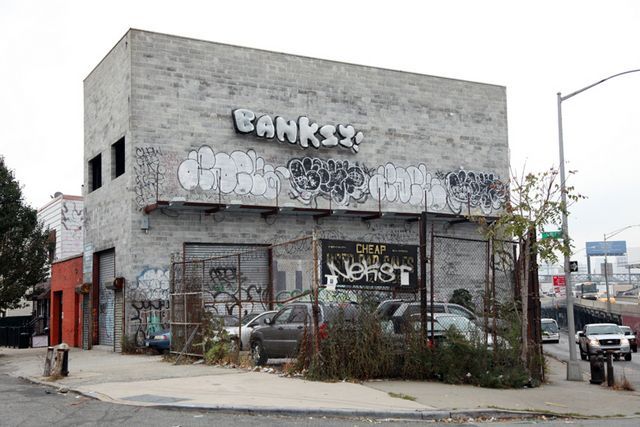
But speed does not mean absence of style. The best throw-ups are immediately identifiable. Letter proportions, connections, negative space and the shape of individual characters can make a simple two-colour name as distinctive as a highly rendered burner.
Built for repetition
Throw-ups developed around repetition. A writer could paint the same name across multiple surfaces in a single night, creating a visual rhythm across a neighbourhood, subway line or city.
That repetition is central to graffiti itself. The objective was never simply to make one image. It was to establish a name in public space until it became impossible to ignore.

New York and the subway era
During the expansion of New York graffiti in the 1970s and early 1980s, throw-ups became inseparable from the competition for visibility. Writers needed forms that could be executed quickly while still carrying enough personality to be recognised from a distance.
Subway cars, walls, lay-ups and other high-pressure spots rewarded efficiency. Over time, writers developed increasingly personal approaches to what initially appeared to be a simple format.
Why throw-ups still matter
The throw-up has survived almost every shift in graffiti culture. Trains disappeared from regular service in New York, styles travelled internationally, spray paint technology improved and social media changed how work circulates. The throw-up remained.
Its strength is precisely its limitation. With only a few letters, a handful of movements and very little time, a writer has nowhere to hide. The form has to work.
That is why a good throw-up can tell you almost everything about a writer: confidence, rhythm, control and an understanding of letters.
It is one of graffiti’s simplest forms, and one of the hardest to fake.